


Summary
The most frequent early problems following knee replacement are pain, swelling, and stiffness. The worst things that people are concerned about are blood clots and infection. Robotic knee surgery may introduce pin-site complications, soft tissue injury and a learning curve. When the recovery issues are identified early, most of them can be resolved.
Introduction
The NHS says that a painful, swollen, and stiff knee is usual after knee replacement surgery. AAOS states that infection is not so frequent; approximately 1 out of 100 patients is affected, yet blood clots are a significant issue.
That combination is stressful. One day you hope to be relieved. Then your knee is tight and sore and slow. A lot of people start wondering what is normal and what is not.
This guide simplifies it all in simple English. You will understand the most frequent issues, the risks that are robotic-specific, the red flags, and how Team Ortho Robotics can make expert care surrounding safer recovery.
What are the most common problems after knee replacement surgery?
Problems do not tend to be dramatic. They are the irritating, slow-downers of recovery. Top of the list are pain, swelling, and stiffness. Others also experience weakness, loss of movement and difficulty in sleeping due to irritation of the knee.
The NHS says swelling can last for months. It also states that pain and stiffness can last some time, particularly initially. This is the reason why physiotherapy and movement are so important.
Infection, blood clots, and nerve injuries, as well as the loosening of the prosthesis, are also known complications listed by AAOS. These problems are not seen in most patients, but they are the ones that surgeons are on the lookout for.
Common problems at a glance
| Problem | What it feels like | How common or important | What usually helps |
| Pain | Soreness, burning, or deep ache | Very common early on | Pain medicine, rest, rehab |
| Swelling | Puffy knee, ankle, or foot | Very common and can last months | Elevation, ice, movement |
| Stiffness | Hard to bend or straighten | Common after surgery | Exercises and physiotherapy |
| Blood clot | Calf pain, redness, swelling | Serious and needs fast attention | Anticoagulants and urgent review |
| Infection | Fever, wound redness, drainage | Less common, but serious | Antibiotics or more treatment |
Real talk: not every sore knee means something is wrong. But the pattern matters. If the knee gets worse instead of better, that is the sign to act.
Which early recovery symptoms are normal after surgery?
A lot of early symptoms are part of normal healing. The body is dealing with bone work, soft tissue trauma, and inflammation. So the knee may feel warm, swollen, stiff, and tired. That does not automatically mean failure.
The NHS patient guidance says people often need regular exercise to avoid stiffness. It also notes that swelling can take months to settle. In other words, recovery is not a straight line.
Normal versus not normal
| Normal early recovery | Needs urgent medical advice |
| Mild to moderate pain | Severe or suddenly worsening pain |
| Swelling that slowly improves | Redness, heat, pus, or spreading swelling |
| Stiffness that gets easier with exercise | Calf pain or one-sided leg swelling |
| Tiredness after activity | Shortness of breath or chest pain |
A simple example: a patient may struggle to climb stairs for a few weeks. That is common. But if the knee becomes hotter, more painful, and more swollen, that needs review.
What problems are specific to robotic knee surgery?
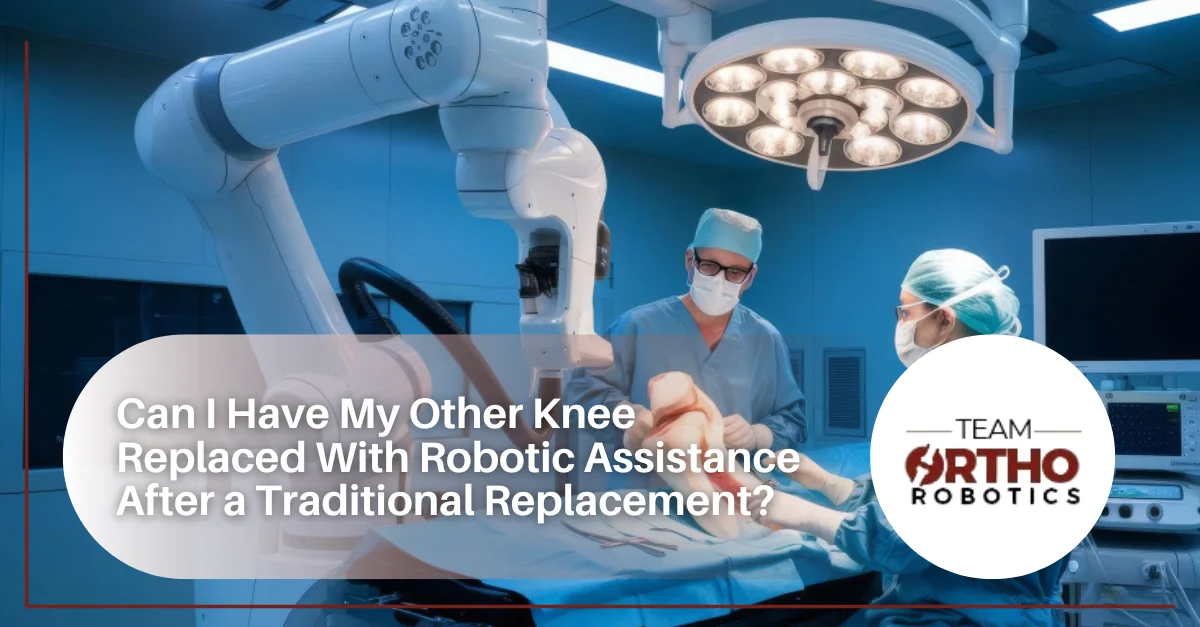
Robotic knee surgery still carries the usual knee replacement risks. It is not magic. It is a tool that helps the surgeon work more precisely. The robot supports the operation, but it does not remove all complications.
A 2023 systematic review found robotic-specific issues such as pin-hole fracture, pin-related infection, soft tissue and bony injury, and excessive blood loss. That is the stuff people do not always hear about in ads.
Another review found pin-related complications were uncommon, at about 1.4% overall. The most common problems were pin loosening and superficial pin-site infection. So yes, the risk is real, but it is not common.
Robotic knee surgery problems versus standard knee replacement
| Area | Robotic knee surgery | Standard knee replacement |
| Precision support | Uses computer guidance for planning and cuts | Surgeon uses manual instruments and experience |
| Unique risks | Pin-site infection, pin-hole fracture, tracker-related injury | Fewer pin-related issues |
| Learning curve | Operative time can be longer early on | More established workflow |
| Costs | Higher system and operating costs have been reported | Usually less tech-dependent |
| Main recovery issues | Still includes pain, swelling, stiffness, clot risk | Same core recovery issues |
A 2025 systematic review found surgeons need roughly 16 to 21 cases to reach proficiency in some robotic techniques. That learning curve matters, because experience can affect timing and workflow.
That is why the team behind the technology matters as much as the robot itself. For patients comparing options, Team Ortho Robotics should be positioned around expertise, training, and recovery support, not just the machine.
How can you reduce the risk of complications after surgery?
The biggest risk-reducer is simple: follow the rehab plan. Early movement lowers clot risk and helps the knee loosen up. Hospitals and NHS guidance repeatedly stress exercise, walking, and clot prevention after surgery.
You also need clean wound care. Infection can sometimes start from outside the knee, including from skin, urinary, or dental infections. That is why aftercare instructions matter so much.
Best ways to lower risk
- Walk as advised, even if it feels small.
- Do your home exercises every day.
- Keep the wound clean and dry.
- Use stockings or blood thinners if prescribed.
- Report fever, drainage, or worsening redness fast.
A real-world example: someone who stays inactive for days is more likely to feel stiff and swollen. Someone who walks a little, often, usually recovers more smoothly. That is the kind of boring advice that actually works.
For a brand page, this is a great place to add a contextual CTA. Team Ortho Robotics can invite readers to schedule an appointment, learn about robotic-assisted planning, or talk through recovery expectations before surgery.
When should you call your surgeon or seek urgent help?
Call your surgeon if the knee is getting more painful, more swollen, or more red. Those are not the symptoms to “wait and see” on. NHS and AAOS guidance both say worsening pain, wound drainage, fever, and calf swelling need prompt review.
Seek urgent help right away for shortness of breath, chest pain, or symptoms that suggest a clot has moved to the lungs. That is the big emergency scenario after knee replacement.
Red flags you should not ignore
- Sudden calf pain or one-sided swelling.
- Fever, chills, or drainage from the wound.
- New chest pain or breathing trouble.
- Fast-rising redness or heat around the knee.
A common mistake is assuming all swelling is normal forever. It is not. Mild swelling can be expected. But worsening symptoms need action, not vibes.
Is robotic knee surgery worth it despite the risks?
For many patients, robotic surgery can be worth it. Studies show it may improve alignment and component positioning. That is a real benefit. But it still comes with standard surgical risks and some robot-specific ones.
So the smart question is not, “Is it perfect?” The smart question is, “Is this surgeon, this robot, and this recovery plan right for me?” That is where expert consultation matters.
At Team Ortho Robotics, the strongest positioning is simple. Show that robotic tools are part of a bigger safety system. That system should include planning, precision, rehab, and clear patient education.
FAQ
What is the most common problem after knee replacement surgery?
The most common early problems are pain, swelling, and stiffness. They tend to get better as time goes by, with movement and physiotherapy.
What is the biggest serious risk after knee replacement?
Blood clots and infection are the big serious risks. Blood clots need urgent attention because they can travel to the lungs.
Does robotic knee surgery have extra risks?
Yes. Robotic surgery can add pin-site infection, pin-hole fracture, and learning-curve issues. These are uncommon, but they are real.
How long does swelling last after knee replacement?
Swelling can last for months. It should slowly improve, not keep getting worse.
When should I call my doctor after surgery?
Call right away for fever, wound drainage, calf pain, chest pain, or shortness of breath. Those are warning signs, not normal recovery.
Conclusion
Pain, swelling, stiffness, and slow early recovery are the most prevalent post-knee replacement surgery problems. The severe ones are blood clots, infection, nerve damage, and problems with the implants. Robotic knee surgery is not without its issues, particularly with pin-related issues and risks of a learning curve.
The positive aspect is that the majority of problems could be dealt with at an early stage. It refers to monitoring symptoms, adhering to rehab, and seeking assistance immediately when something does not work. Team Ortho Robotics must be the choice where patients and families can speak frankly about the risks, recovery, and suitability of robotic-assisted surgery to the case. Make a reservation or discuss with a specialist.

MS(Ortho) | DNB(Ortho) | FICS
13 Years of Experience
Area of Expertise: Joint Replacement, Fracture Surgery, Arthritis, Osteoporosis