


Life with severe and chronic joint pains can severely lower your overall quality of life. Even the most routine things like climbing a simple flight of stairs, visiting a grocery store, or even merely standing out of a chair are monumental tasks. Advanced osteoarthritis, rheumatoid arthritis, and post-traumatic arthritis may slowly erode the natural, protective cartilage of the knee joint, which is bound to cause painful bone-on-bone friction.
The current extensive guide will take you through the facts that you, as a patient, must understand about this life-changing medical procedure.
Understanding the Robotic-Assisted Approach
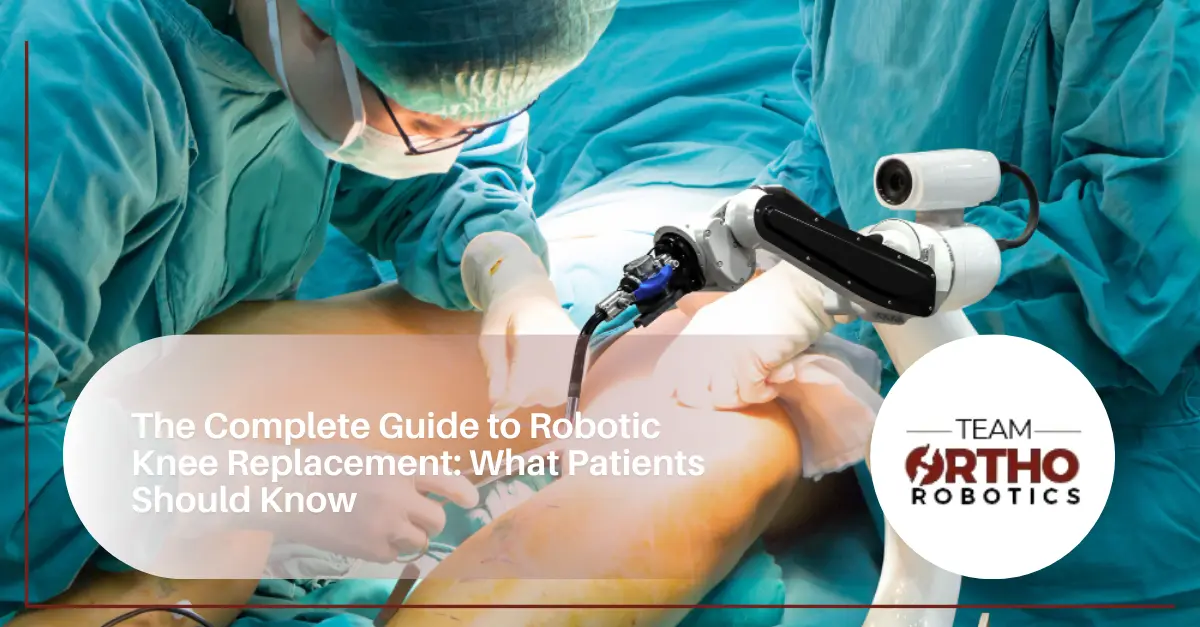
One of the most widespread myths that patients have is that an autonomous robot is the one that operates a patient, and the surgical team is just watching the computer screen 3 meters away. This is entirely false. Throughout the process, the orthopedic surgeon has complete dominion over the entire process. The robotic arm is a highly calibrated, exceptionally advanced tool, which is meant to help people improve their precision rather than to substitute it.
This process starts many years before you join the operating room. The specifications of your damaged knee are captured by advanced imaging technology, which is normally a high-resolution CT scan or an MRI. This advanced data is input into advanced software to create a tailored and highly detailed three-dimensional representation of your joint.
With this model on the computer, your surgeon pre-plans every bone incision and decides on the optimum size, position, and alignment of the artificial implant, which is absolutely perfect.
In the actual surgery, the robotic arm makes use of real-time sensory feedback and intraoperative navigation. It establishes virtual limits, so that the surgical tools are not moved outside the safe zone that has been planned.
Key Benefits of the Technology
Some of the major advantages are:
- Incomparable Surgical Accuracy: A surgeon can never be as accurate with their hands as a robotic arm controlled by sophisticated 3D imaging. Proper alignment is vital. An implant that is perfectly aligned is remarkably close to the normal movement of a healthy knee, and premature wear and tear are reduced to a maximum; that is, artificial joints can be expected to last much longer.
- Minimally Invasive Techniques: Since surgery using the robotic system can remove bone with a great level of precision, the surgeon is able to work with much smaller cuts. This accuracy spares the majority of your natural, healthy bones, ligaments, and soft tissues in the surrounding area.
- Quick and More Efficient Recovery: Lower rate of collateral tissue damage implies that patients generally have much less swelling, bruising, and pain during the postoperative phase. A number of them are walking and making their first steps within a few hours of the operation, and end up spending a lot less time in the hospital.
- The Perfect Soft Tissue Balancing: It is extremely essential to achieve the correct tension of the knee ligaments to ensure long-term stability of the joint. Robotic systems also give real-time measurements of the tension on the ligaments during the surgery, which enables the surgeon to position the soft tissues to the exact position to give the knee a more natural feel.
The Rehabilitation Timeline
Although each of us recovers at our own rate, it is usually much faster than when it was done manually:
- Day 1-3: The first thing you will commence is physical therapy, which will start nearly immediately. You can be on your feet, perhaps with the help of a walker, walking as short a distance as you can on the same day you have your procedure.
- Weeks 2-4: You will start to transition to comfortably healing at home, and you will be given exercises to be performed to heal your entire body of motion. The pain levels will gradually lower, and many patients will be able to use a cane or even abandon the idea of using walking aids. You may even drive when you are completely off the strong pain medications.
- Months 3-6: You are expected to experience a significant and observable change in your overall mobility. Light exercises such as stationary bicycling, swimming, and brisk walking are pleasant again. Your knee will be very stable, and the chronic preoperative pain will be long gone.
Seeking World-Class Treatment
It is crucial to find a hospital that comprises all necessary state-of-the-art robotic infrastructure and well-trained medical professionals that will guarantee a successful outcome. The nature of expertise demanded makes a high number of patients commute to large medical centers. To give an example, when you are seeking robotic knee replacement surgery in Mumbai, you will discover some of the best healthcare facilities in the country.
The city has worldwide trained orthopedic surgeons who constantly carry out these complicated life-saving surgeries. By choosing to have robotic knee replacement in Mumbai, one can be guaranteed of unmatched access to end-to-end care.
The state-of-the-art technology, coupled with high-quality surgical expertise, produces genuine peace of mind for patients who consider robotic knee replacement surgery. You decide to get your robotic knee replacement in Mumbai, and that is a decision where you are putting your future mobility in the hands of the top-notch healthcare services.
Conclusion
Having debilitating, severe joint pain is no longer a natural part of the aging process that is inevitable. The unbelievable robotic-assisted joint replacement provides a clinically established, highly secure, and most importantly, highly effective medical direction to a complete recovery of your self-sufficient quotient and returning to pursuits that you most appreciate.
Make the first move towards painless living. Refer to the Orthorobotics of Kaushalya Medical Foundation Trust Hospital, the contact team that specializes in the treatment of joints.
FAQs
What is robotic knee surgery?
A robotic arm is used by the surgeon to position the implant to the closest possible position that enhances the overall outcome.
How long does recovery take?
The majority of patients can walk hours later, and are able to resume their everyday activities after a period of three months.
Is it the robot that does surgery?
No, the orthopaedic surgeon is in full command, and it is only the robotic system that is used to provide precision.