


Summary: Robotic knee replacement uses a 3D surgical plan and computer-guided precision to position the implant, while traditional knee replacement relies on the surgeon’s manual technique and instrumentation. The seven differences that matter most are planning method, implant alignment accuracy, bone and tissue handling, recovery pace, pain in the early weeks, cost, and the surgeon’s experience with the system. Neither approach removes the need for a skilled surgeon; the robot supports the surgeon’s judgement rather than replacing it. Here is how the two compare, point by point.
Patients researching knee replacement surgery in Mumbai often assume “robotic” simply means a robot performs the operation. It doesn’t. In both approaches, the surgeon carries out the surgery. The difference is in the planning and precision behind each cut and placement, and that difference shows up in measurable ways.
The 7 Key Differences
1. Pre-Surgical Planning
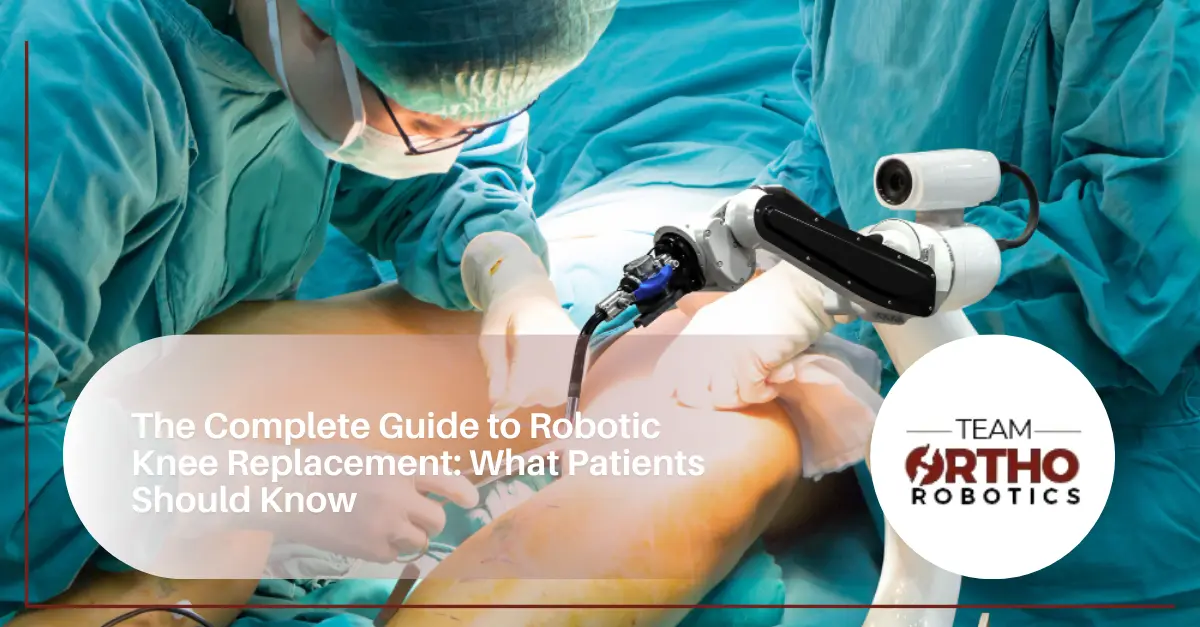
Traditional knee replacement is planned largely from X-rays and the surgeon’s experience during the operation itself. Robotic knee replacement starts with a CT scan or 3D imaging that builds a digital model of your knee before you ever enter the operating theatre.
That model lets the surgeon map implant size, position, and alignment in advance, then verify it against the actual anatomy in real time during surgery. Traditional surgery makes many of these calls in the moment, based on visual judgement and standard instrumentation.
2. Implant Alignment Accuracy
This is where the data is clearest. A systematic review and meta-analysis of randomised controlled trials found that robotic-assisted total knee replacement produced significantly better hip-knee-ankle alignment and femoral rotational alignment than conventional surgery. Better alignment matters because a knee implant positioned even a few degrees off can wear unevenly or feel unnatural.
Traditional instrumentation can achieve excellent alignment in experienced hands, but robotic guidance narrows the margin for variation across a wider range of cases and anatomies.
3. Bone and Soft Tissue Handling
Robotic systems use real-time feedback to guide bone cuts within the pre-planned boundaries, which typically means less disturbance to the surrounding soft tissue and ligaments than freehand cutting jigs used in traditional surgery.
More controlled tissue handling during the procedure is part of why some patients report a smoother early recovery, though this varies by surgeon skill and case complexity in both approaches.
4. Early Recovery and Physiotherapy
A large-scale study of over 10,000 patients found that median time to hospital discharge was 77 hours after robotic-arm assisted knee replacement compared with 105 hours after conventional jig-based surgery, alongside reduced pain and lower analgesia requirements in the robotic-assisted group.
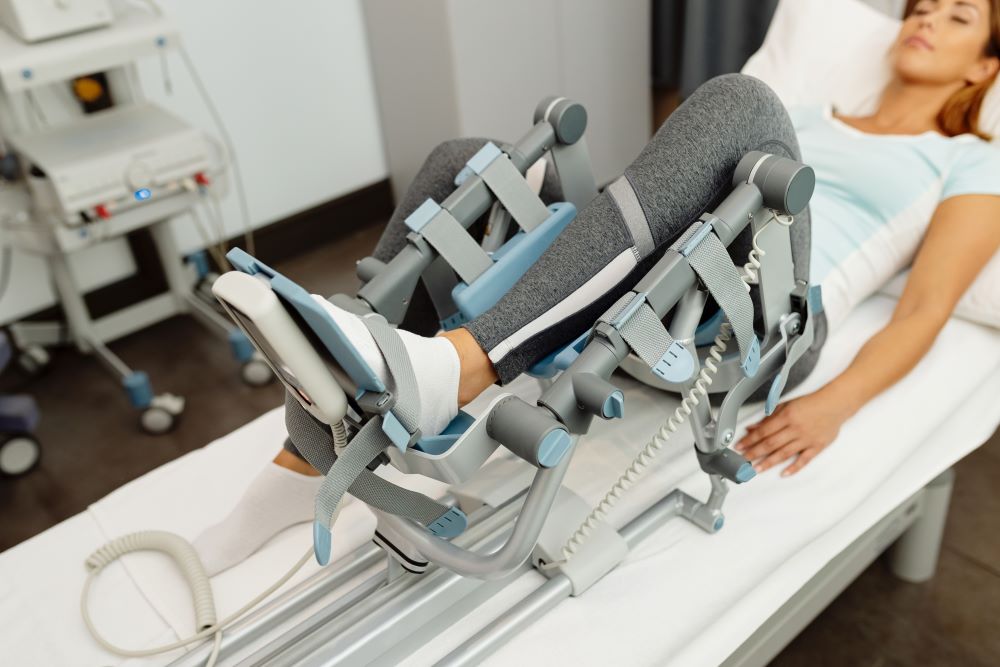
In practice, this often means patients stand and start walking sooner after robotic surgery, though individual recovery still depends heavily on age, fitness, and how closely the physiotherapy plan is followed.
5. Long-Term Function and Complication Rates
This is the part that surprises many patients. Despite the alignment advantage, clinical studies have generally found similar long-term functional scores, pain levels, and complication rates between robotic and traditional knee replacement. The precision benefit is real, but it doesn’t automatically translate into a dramatically different knee ten years down the line for every patient.
Where robotic guidance earns its place is in complex or unusually shaped knees, where the margin for manual error is naturally higher.
6. Cost
Robotic knee replacement generally costs more than traditional surgery because of the added imaging, robotic instrumentation, and system usage fees layered on top of standard hospital and implant costs. The exact knee replacement surgery cost in Mumbai depends heavily on the hospital, implant brand, and case complexity, so it’s worth getting a full breakdown rather than comparing headline numbers between clinics.
For a detailed, line-by-line look at how robotic and traditional pricing actually compares in Mumbai, our cost comparison guide breaks down each component separately.
7. Surgeon Experience With the System
A skilled traditional surgeon and a skilled robotic surgeon can both deliver excellent outcomes. What matters more than the technology itself is how many robotic-assisted cases the specific surgeon has performed, since the learning curve on any robotic system affects both surgical time and precision in the early stages of adoption.
Robotic vs Traditional: At a Glance
| Factor | Traditional Knee Replacement | Robotic Knee Replacement |
| Planning | X-ray-based, decided during surgery | 3D scan, planned in advance |
| Alignment accuracy | Good, surgeon-dependent | Higher, computer-verified |
| Tissue handling | Freehand instrumentation | Guided within pre-set boundaries |
| Early recovery | Standard physiotherapy timeline | Often faster in the first few weeks |
| Long-term function | Comparable in most studies | Comparable in most studies |
| Cost | Lower | Higher, due to added technology |
| Best suited for | Standard knee anatomy | Complex or atypical knee anatomy |
Choosing Between the Two
Neither option is automatically “better” for every patient. A straightforward case in experienced hands can do very well with traditional instrumentation. A complex deformity, a revision case, or a patient who wants the added precision data may benefit more clearly from robotic guidance.
The right conversation to have with your surgeon isn’t “which technology is superior” in the abstract, it’s which approach suits your specific knee, your health, and your recovery goals.
Finding the Right Team for Either Approach
Choosing between robotic and traditional knee replacement matters less than choosing an experienced surgical team, since outcomes in both approaches depend heavily on surgical skill and case volume. Patients researching the best knee replacement hospital in Mumbai should ask directly how many robotic and traditional cases the surgeon performs each year, not just which brand of robotic system the hospital owns.
Team Ortho Robotics offers both robotic and traditional knee replacement at Kaushalya Hospital in Thane, serving patients across Mumbai, with surgeons who assess each knee individually before recommending an approach rather than defaulting to one technology for every patient.
Frequently Asked Questions
Is robotic knee replacement better than traditional knee replacement?
Robotic knee replacement offers more precise implant alignment, which studies confirm, but long-term functional outcomes are broadly similar between the two approaches. It tends to benefit complex cases more clearly than straightforward ones.
Does robotic knee replacement hurt less than traditional surgery?
Research shows robotic-assisted patients often report less pain and need less pain medication in the first few weeks. This gap narrows over time, and both approaches involve manageable, well-controlled post-operative discomfort.
How much more does robotic knee replacement cost in Mumbai?
Robotic knee replacement typically costs more than traditional surgery due to added imaging, instrumentation, and system fees. The exact difference depends on the hospital and implant, so a written, itemised estimate is the most reliable way to compare.
Is robotic knee replacement safe for older patients?
Yes, age alone does not rule out robotic knee replacement. Suitability depends on overall health, bone quality, and the complexity of the knee, which your surgeon assesses individually rather than applying a blanket age cutoff.
Which is faster to recover from, robotic or traditional knee replacement?
Robotic knee replacement often shows a faster start to recovery, with less physiotherapy time needed in the first few weeks. By three to six months, most patients from both approaches reach a similar level of function.
Considering knee replacement and unsure which approach fits your knee? Talk to our team for a personalised assessment and an honest, itemised estimate. Book a consultation with Team Ortho Robotics today.