


Medically reviewed by a consultant robotic joint replacement surgeon
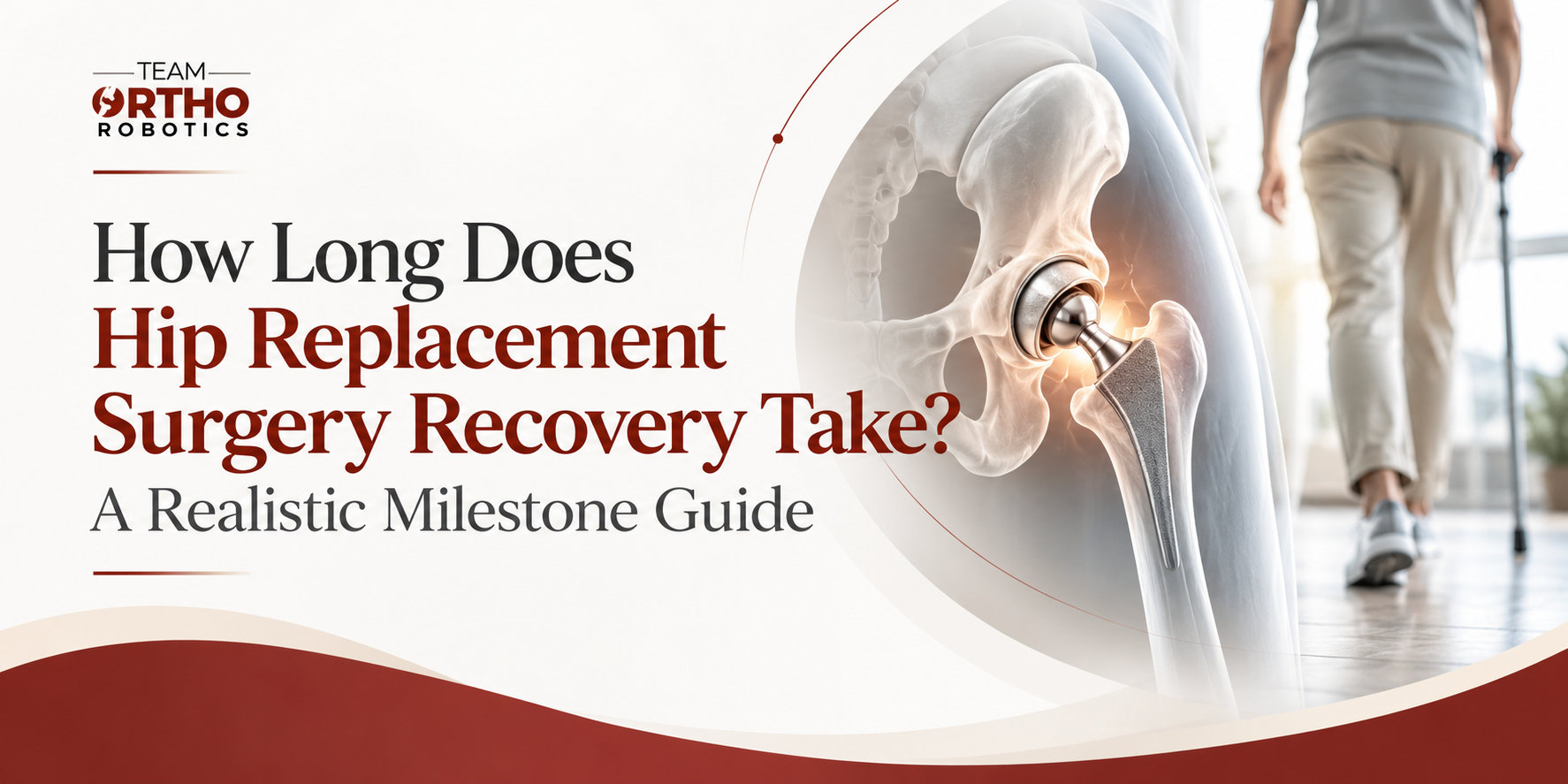
Hip replacement recovery time is shorter than most people expect. With modern minimally invasive techniques, many patients walk with support within hours of surgery, manage stairs the next day and go home in two to four days. Most people drive again at around six weeks and feel close to normal by three months, while full strength and confidence keep improving for up to a year.
Key insights
- The first steps come fast: walking on the day of surgery is now routine, not exceptional.
- Six weeks is the big milestone: it’s roughly when braking reaction returns and most people drive again.
- Work depends on the job: desk workers often return within weeks, physical jobs take longer.
- The last 10% takes the longest: the final improvements in strength and endurance can take months.
Before you plan your recovery
Ask your surgeon for their own pathway in writing: when they’ll get you up, when they expect you home and what you should be able to do at two, six and twelve weeks. A timeline you can measure yourself against is far more reassuring than a vague “everyone’s different”.
If you’ve been told you need a hip replacement, the operation itself is often not what worries you most. It’s the recovery. How long will I be in bed? When can I go back to work? When can I drive? Will I ever sit cross-legged again?
The good news is that hip replacement is one of the fastest-recovering big operations in orthopaedics, and it’s got faster in the last decade. Below is a realistic timeline, milestone by milestone, plus what tends to speed it up or slow it down, whether you’re having hip replacement surgery in Mumbai, Thane or anywhere else.
How soon can you walk after a hip replacement?
Many patients now walk with a walker and a physiotherapist within hours of a hip replacement, usually on the same day. With modern minimally invasive techniques, first steps at four to five hours after surgery are common, and most people manage stairs by the next day.
Why early walking matters
Getting up early reduces the risk of blood clots, chest infections and stiffness, and it does wonders for confidence. Patients who walk on day one tend to go home sooner.
What helps make it possible
Minimally invasive approaches, good pain control that doesn’t make you drowsy, and a team that’s set up to mobilise patients quickly. Less muscle disturbance means less pain when you first stand.
What happens in the first week?
In the first week, you’ll move from walking short distances with a walker to walking further, managing stairs and doing basic exercises, and most patients are discharged home within two to four days. Pain is usually well controlled with tablets by the time you leave.
| Time | Typical milestone |
| Day 0, hours after surgery | Sitting up, standing, first steps with a walker |
| Day 1 | Walking longer distances, stairs with support |
| Days 2 to 4 | Discharge home for most patients |
| Days 5 to 7 | Walking around the house, home exercises |
At home
Set up a “recovery zone”: a firm chair with arms, a raised toilet seat if advised, clear walkways and everything you need within reach.
Wound care
Keep the wound clean and dry. Stitchless closures and waterproof dressings make the first week easier.
When will life start to feel normal again?
Between two and six weeks after surgery, most patients move from a walker to a stick, walk outdoors, do light household tasks and feel much less pain than before the operation. By six weeks, many people are walking without aids for short distances.
Weeks 2 to 3
Walking gets easier day by day. Most people move to one stick or crutch, and short outdoor walks become possible.
Weeks 4 to 6
Many people drop the stick indoors, manage most daily tasks and start to forget about the hip for parts of the day.
What still feels hard
Putting on socks, getting in and out of low cars, and long walks. These take longer to come back.
When can you drive after a hip replacement?
Most people can drive again around six weeks after a hip replacement, once they can brake firmly and safely and are off strong painkillers. Research on braking reaction time shows it typically returns to or beats pre-operative levels by about six weeks.
What the research says
A systematic review of driving after hip replacement found braking performance returned to baseline at around six weeks, and most patients reported returning to driving within about six weeks.
Left hip, automatic car
If your left hip was replaced and you drive an automatic, you may be able to drive a little earlier. Check with your surgeon and your insurer.
The real test
You must be able to do an emergency stop without hesitation or pain. If you can’t, you’re not ready, whatever the calendar says.
When can you go back to work?
Desk-based workers often return within four to six weeks, while people with physically demanding jobs usually need around three months. Most people who were working before surgery do go back to work.
What the evidence shows
A 2023 meta-analysis of 48 studies found that among patients working before surgery, 87.9% returned to work after hip replacement. Younger patients and those who had minimally invasive surgery tended to return sooner, while physically demanding jobs slowed return.
| Type of work | Typical return |
| Desk or remote work | 2 to 6 weeks |
| Mixed, some standing and walking | 6 to 8 weeks |
| Heavy manual, lifting, climbing | Around 3 months, sometimes longer |
Easing back in
Shorter days, a phased return or working from home for the first week or two makes going back less tiring.
How long until you’re fully recovered?
Most people feel close to normal by about three months, but strength, stamina and confidence keep improving for six months to a year. The final stage of recovery is about rebuilding muscles that may have weakened over years of hip pain.
Three months
Most people walk without aids, sleep comfortably and are back to most of their daily activities.
Six to twelve months
Muscle strength, balance and endurance keep improving. Swimming, cycling, long walks and golf are common goals in this phase.
A note on “hip ball” replacement
If you’ve had only the ball replaced, usually after a fracture, recovery depends a lot on how mobile you were before the fall, and it tends to take longer than a planned total hip replacement.
What speeds up or slows down hip replacement recovery?
Recovery is usually faster with a minimally invasive approach, early walking, good pre-operative fitness, a healthy weight and a committed home exercise routine. It tends to be slower with diabetes, obesity, smoking, poor pre-operative mobility, complications or skipped physio.
| Speeds it up | Slows it down |
| Minimally invasive surgery | Smoking |
| Walking on the day of surgery | Poorly controlled diabetes |
| Exercising before surgery (“prehab”) | Obesity |
| Good pain control | Long-standing weakness before surgery |
| Daily home exercises | Skipping physio |
| Support at home | Complications like infection or clots |
Prehab works
Strengthening your hip, thigh and core muscles before surgery often means you bounce back faster afterwards. Ask for a prehab plan when you book.
Choosing your surgeon matters
Surgeon experience and the team’s pathway shape your recovery as much as the implant does. When people look for the best orthopedic doctor in Thane for a hip, they’re really looking for a team with a proven early-mobility pathway.
Wrapping up
So how long does hip replacement recovery take? Hours to first steps, days to discharge, about six weeks to drive and feel independent, around three months to feel normal, and up to a year for the last bits of strength and stamina. The biggest factors you control are your fitness before surgery and your commitment to exercise afterwards.
Team Ortho Robotics performs hip replacement surgery in Thane at Kaushalya Medical Foundation Trust Hospital using minimally invasive techniques, with a published pathway that has patients walking four to five hours after surgery, on the stairs the next day and home in two to four days. The team’s three consultants have together performed more than 10,000 knee and hip replacements over two decades. If you’re weighing up hip surgery, book a consultation with the team and ask to see the recovery plan for your own case.
FAQs
How long does it take to recover from a hip replacement?
Most people walk within hours, go home in two to four days, drive around six weeks and feel close to normal by three months. Strength and stamina keep improving for up to a year.
How soon can you walk after hip replacement surgery?
Usually on the day of surgery, with a walker and a physiotherapist. With minimally invasive techniques, first steps four to five hours after surgery are common, and most people manage stairs the next day.
When can I drive after a hip replacement?
Most people drive again around six weeks after surgery, once they can do an emergency stop without pain and are off strong painkillers. Research shows braking reaction typically returns to baseline around then.
When can I return to work after hip replacement?
Desk workers often return within two to six weeks. Physically demanding jobs usually need around three months. Most people who were working before surgery do return to work afterwards. A phased return is easier.
What is the recovery time for hip ball replacement surgery?
Replacing only the ball, usually after a fracture, often takes longer than planned total hip replacement. Recovery depends heavily on mobility before the fall, and most patients use a walker for several weeks.
What slows down hip replacement recovery?
Smoking, poorly controlled diabetes, obesity, weakness before surgery, skipped physiotherapy and complications like infection or clots. Prehab exercises before surgery and daily exercise afterwards both speed recovery. Good pain control helps you keep moving.