


Medically reviewed by a consultant robotic joint replacement surgeon | 9 min read
Some swelling, bruising and discomfort around the hip and thigh is completely normal in the first two weeks after hip replacement. It usually peaks in the first few days, then settles gradually as you walk more. Regular short walks, ice, ankle pumps, prescribed pain relief and rest with your leg supported help most. Swelling in one calf, calf pain, fever or a leaking wound needs a call to your surgeon straight away.
Key insights
- Swelling is part of healing: your body sends fluid and blood to the operated area, so the thigh, and sometimes the knee and ankle, will look puffy for a while.
- Movement is the best medicine: short, frequent walks and ankle pumps keep fluid moving and lower the risk of clots.
- Stay ahead of the pain: take prescribed pain relief on schedule in the early days, rather than waiting for the pain to build.
- Know the red flags: new swelling in one calf, chest pain or breathlessness are emergencies, not normal recovery.
Before you go home
Ask the ward team to show you your ankle pumps, how to put on your stockings if you’ve been given them, and how to ice safely. Take a photo of your wound on the day you leave. If anything looks different later, you’ll have something to compare it with.
You’ve had your new hip, you’re already up and walking, and now you’re home. Then, a few days in, you notice your thigh looks bigger than before the operation. There’s a purple bruise spreading towards your knee, and your ankle’s swollen by evening.
It’s worrying, but in most cases it’s exactly what’s expected. Whether you’ve had hip replacement surgery in Mumbai, Thane or anywhere else, the first two weeks follow a fairly predictable pattern. This guide walks you through it, day by day, with practical tips to stay comfortable and clear signs that mean you should call your surgeon.
Why do you get swelling and discomfort after hip replacement?
Swelling happens because surgery triggers your body’s natural healing response. Fluid, blood and healing cells collect around the hip, and gravity pulls some of that fluid down the thigh towards the knee and ankle. Discomfort comes from the healing muscles, the wound and that build-up of fluid.
The healing response
Any surgery on bone and muscle causes inflammation. It’s the first stage of repair, and some swelling is a sign it’s working.
Bruising that travels
Blood under the skin often tracks down the thigh with gravity. A bruise that appears near your knee a few days later is common and usually harmless.
Less movement, more fluid
When you sit or lie still for long periods, your calf muscles stop pumping fluid back up the leg. That’s why ankles often swell more by the evening.
What should you expect in the first 2 weeks?
Expect swelling and discomfort to be at their worst in the first few days, then ease steadily over the two weeks. Most patients notice a clear improvement by the end of week two, though some swelling can last for several weeks.
| Time after surgery | What’s typical | What helps most |
| Days 1 to 3 (often in hospital) | Swelling builds, wound feels tight, first walks with support | Pain relief on schedule, ankle pumps, short assisted walks, ice |
| Days 4 to 7 (home) | Swelling and bruising often peak, ankle puffy by evening | Short frequent walks, leg supported during rests, ice after exercise |
| Days 8 to 14 | Swelling starts to ease, more comfortable walking | Gradually longer walks, home exercises, fewer pain tablets |
Days 1 to 3
With a modern minimally invasive approach, many patients take their first steps within hours of surgery and manage stairs the next day. The hip will feel tight and sore, and swelling starts to build. The ward team will manage your pain and get you moving.
Days 4 to 7
You’re usually home by now. This is when swelling and bruising often look their worst, so don’t be alarmed. Keep walking little and often, and rest with your leg supported in between.
Days 8 to 14
Things should start to feel easier. You’ll walk further, need less pain relief, and see the swelling go down, especially in the mornings. Some swelling around the thigh and ankle may still be there at the end of week two, and that’s normal.
How can you reduce swelling after hip replacement?
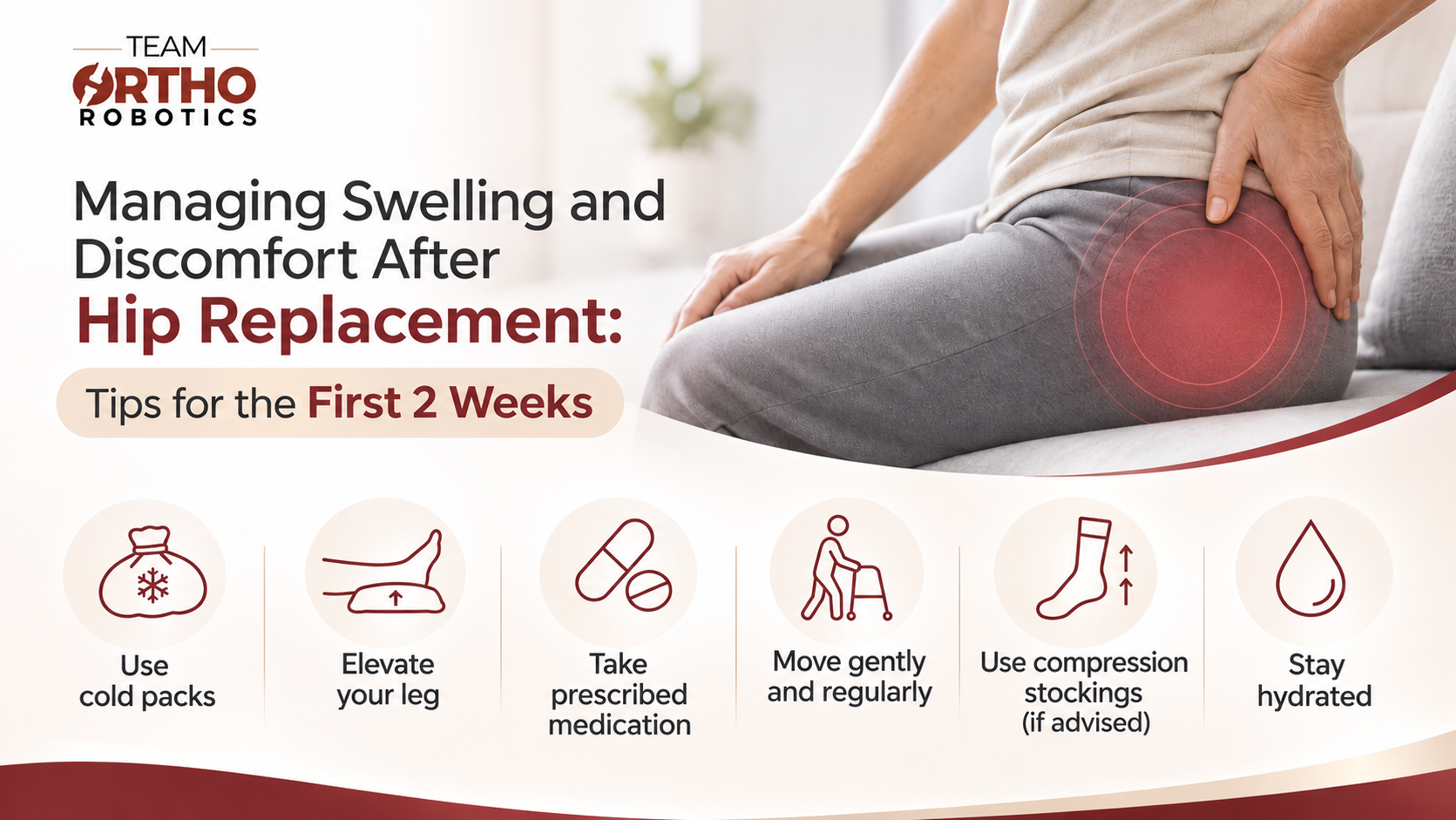
The most effective ways to reduce swelling are to keep moving little and often, do your ankle pumps, use ice, rest with your leg supported and wear compression stockings if your surgeon has prescribed them.
1. Walk little and often
Short walks every hour or two while you’re awake do more than one long walk. Walking works your calf muscles, which pump fluid back towards your heart.
2. Do ankle pumps every hour
Point your toes up towards you, then down away from you, 10 to 20 times. You can do this lying down or sitting, and it’s one of the simplest ways to keep fluid moving and lower the risk of clots.
3. Use ice safely
Wrap an ice pack or cold pack in a thin towel and place it over the front and side of your thigh for about 15 to 20 minutes, a few times a day. It’s especially helpful after exercise. Never put ice directly on the skin, and keep the wound dressing dry.
4. Rest with your leg supported
When you lie down, support the leg comfortably, following your surgeon’s positioning advice. Avoid sitting for long stretches with your feet hanging down, which makes ankle swelling worse.
5. Wear compression stockings if prescribed
If you’ve been given stockings, wear them as instructed. They help control swelling and support circulation.
6. Take blood-thinning medicines exactly as prescribed
Many patients are prescribed medicines or injections to lower clot risk after surgery. Don’t skip or stop them early without checking with your surgeon.
How can you manage pain and discomfort at home?
Manage discomfort by taking prescribed pain relief on schedule in the first days, timing it before exercise, using ice, getting comfortable at night and pacing your activity.
Stay ahead of the pain
In the first week, take pain relief at the times you’ve been told, rather than waiting until it hurts. Pain that’s allowed to build is harder to control and can stop you walking and exercising.
Time it before exercise
Take pain relief about 30 to 60 minutes before your exercises or a longer walk, or as your team advises, so you can move properly.
Sleep comfortably
Night-time discomfort is common. Follow your surgeon’s advice on sleeping position, use pillows for support and take your evening dose of pain relief before bed if prescribed.
Pace yourself
It’s tempting to do a lot on a good day. Steady, regular activity is better than a big burst followed by a day of soreness and swelling.
Look after the wound
Keep the dressing clean and dry, follow your wound care instructions and don’t apply creams to the incision unless you’ve been told to.
What are the warning signs you shouldn’t ignore?
Call your surgeon straight away if you notice new or increasing swelling in one calf, ankle or thigh, calf pain or tenderness, a hot red wound with discharge, a fever, or a sudden increase in hip pain. Sudden breathlessness or chest pain is an emergency.
Signs of a blood clot
The American Academy of Orthopaedic Surgeons lists warning signs of a blood clot after hip replacement, including calf pain unrelated to your incision, tenderness or redness of the calf, and new or increasing swelling of the thigh, calf, ankle or foot. The NHS adds throbbing pain and swelling in one leg, and red or darkened skin, as typical signs of a deep vein thrombosis.
Signs of a clot reaching the lungs
Sudden shortness of breath, sudden chest pain, or chest pain when you cough need emergency care. Call an ambulance.
Signs of infection
Watch for increasing redness, heat or swelling around the wound, discharge or leaking, a fever or chills, or pain that’s getting worse instead of better.
| Normal in the first 2 weeks | Call your surgeon |
| Swelling of the thigh, easing over days | New or increasing swelling in one calf or ankle |
| Bruising that tracks towards the knee | Calf pain or tenderness |
| Ankle puffiness by evening that settles overnight | Swelling that doesn’t settle with rest |
| Soreness that eases with pain relief | Sudden increase in hip pain |
| A dry, healing wound | Redness, heat, discharge or fever |
How does the surgical approach affect the first 2 weeks?
The way the operation is done affects how you feel in those early days. A minimally invasive approach, careful soft tissue handling and early walking all help limit swelling and discomfort.
Minimally invasive surgery
Less disruption to the muscles around the hip generally means less pain and an easier start to walking. That’s one reason early mobilisation is now standard in many joint replacement units.
Early walking
Getting up on the day of surgery helps circulation and gets the calf pump working sooner, which helps with both swelling and clot prevention.
A clear plan before you go home
Knowing your exercises, your medicines and your warning signs before discharge makes the first two weeks far less stressful.
How does Team Ortho Robotics support hip replacement recovery?
Team Ortho Robotics performs hip replacement surgery at Kaushalya Medical Foundation Trust Hospital, Thane, for patients from Thane, Mumbai and beyond. The team’s minimally invasive pathway aims for patients to walk four to five hours after surgery, climb stairs from the next day, and go home in two to four days.
The approach uses minimal blood loss techniques and stitchless closure, and patients are followed up after discharge so concerns about swelling or pain are picked up early. For other joint and bone problems, see the team’s orthopaedic treatment page.
Wrapping up
The first two weeks after hip replacement are often the hardest, and swelling is a big part of why. In most cases it’s normal and it settles. Keep moving little and often, do your ankle pumps, use ice and stay ahead of the pain. Learn the warning signs, and don’t hesitate to call if something doesn’t feel right.
If you’re planning hip replacement surgery in Mumbai or Thane and want to know what your recovery will look like, book a consultation with Team Ortho Robotics.
FAQs
Is swelling normal after hip replacement?
Yes. Swelling of the thigh, and sometimes the knee and ankle, is normal after hip replacement. It usually peaks in the first week and eases gradually, though some swelling can last for several weeks.
How long does swelling last after hip replacement?
Most swelling improves noticeably over the first two weeks, but mild swelling, especially around the ankle by evening, can last several weeks. Regular walking, ankle pumps and ice help it settle.
Should I ice my hip after hip replacement?
Ice can help with swelling and discomfort. Wrap a cold pack in a thin towel and apply it for about 15 to 20 minutes, a few times a day, keeping the dressing dry. Never put ice directly on skin.
Why is my knee or ankle swollen after hip surgery?
Fluid and blood from the hip area track down the leg with gravity, so the knee and ankle can swell or bruise. If swelling is in one calf with pain or tenderness, contact your surgeon immediately.
When should I worry about swelling after hip replacement?
Worry if swelling is new or increasing in one calf or ankle, comes with calf pain or redness, or doesn’t settle with rest. Fever, a leaking wound, chest pain or breathlessness also need urgent attention.
How soon can I walk after a hip replacement?
With a minimally invasive pathway, many patients take their first steps within hours of surgery and manage stairs the next day. Short, frequent walks help reduce swelling and lower the risk of blood clots.